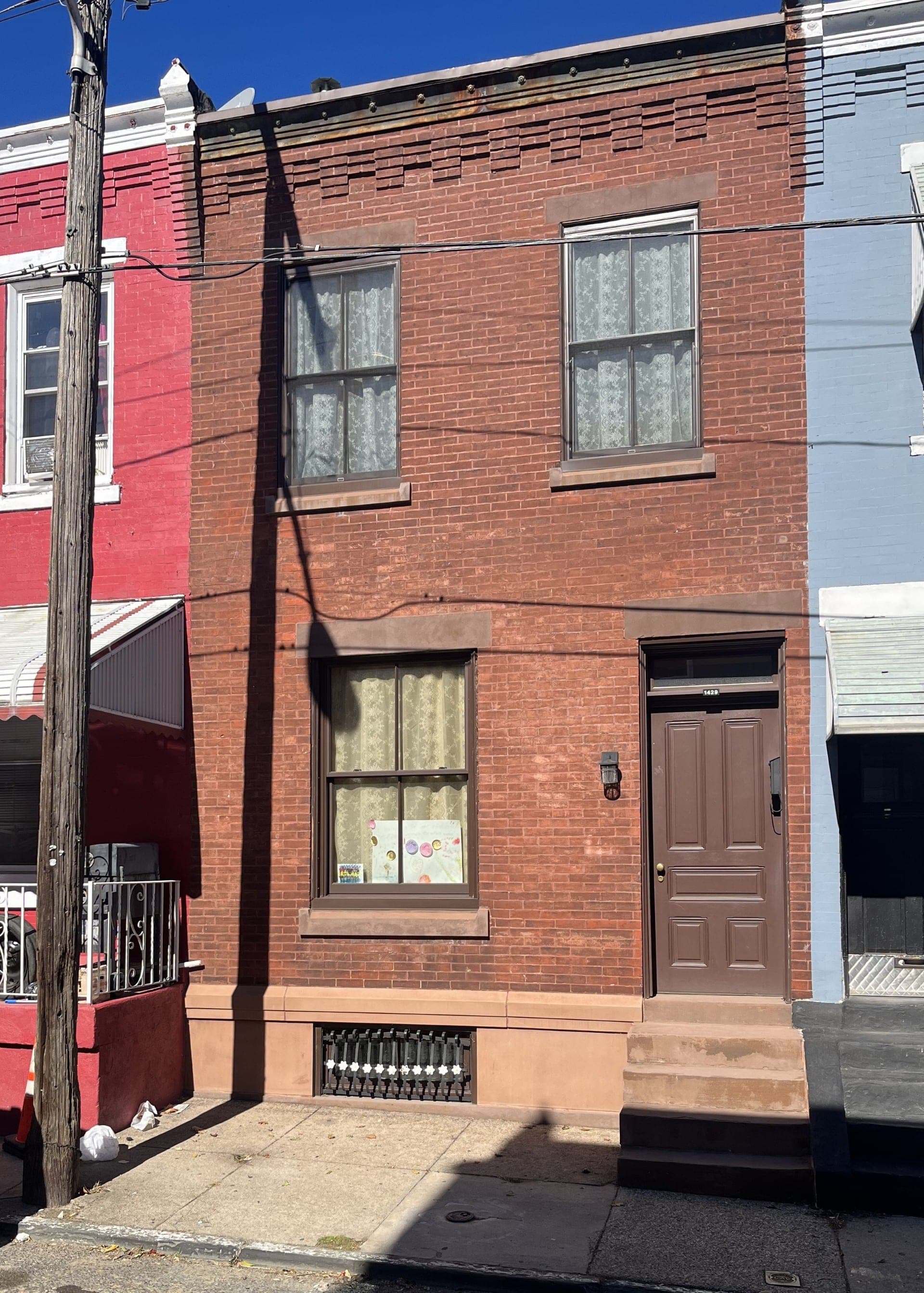
A sacred historic site
Where there is love, nothing is too much trouble and there is always time.
‘Abdu’l-Bahá
Visited by ‘Abdu’l-Bahá on June 10, 1912, one of only four homes He visited in America now preserved by the Bahá’í community.
About
A home at the heart of history
In 1912, ‘Abdu’l-Bahá traveled across America after a lifetime of imprisonment. Among those responding to His call were the Revell family of Philadelphia, who enrolled in the Bahá’í Faith in 1906. Their home at 1429 W. Mayfield Street became the hub of all Bahá’í activity in the Delaware Valley.
On June 10, about 50 Bahá’ís gathered as ‘Abdu’l-Bahá visited every room of the home. He sat in a rocking chair by the front window and spoke of the friends as “brilliant pearls.” Today the house has been restored to its 1912 condition as a place of prayer and reflection.
Plan Your Visit
Before you go
What to Expect
The Revell House is a narrow two-story row home in North Philadelphia, just off of Broad Street, about a mile from Temple University. This historic and sacred home has been lovingly and painstakingly restored and reset to its original 1880s layout. The interior is set to 1912 to recall the time ‘Abdu’l-Bahá visited. Photos and video are permitted. Visitors are welcome to visit with the Caretaker during tea and refreshments in the kitchen.
‘Abdu’l-Bahá referred to Mrs. Revell’s home as the “Bahá’í Home,” and Hand of the Cause Dr. Muhajir called the Revell House the holiest site in Philadelphia. As such, it is sacred space for Bahá’ís.
Visitor Information
- Parking
- W. Mayfield Street is a one-way street with on-street parking. Spaces can be limited. Additional parking is available on Broad and N. 15th Streets.
- Public Transit
- Allegheny Station (corner of Allegheny and Broad) is 3 blocks away. For bus and train schedules, visit SEPTA.org.
- Accessibility
- There is a handrail and a few steps to enter the home. To access the 2nd floor, where the restroom is located, there is a somewhat steep staircase with handrails on both sides. Additional restrooms are available at restaurants on Broad St.
June 8–10, 1912
‘Abdu’l-Bahá in Philadelphia
Two nationally prominent pastors invited ‘Abdu’l-Bahá to speak to their congregations. He addressed over 2,500 people during His three-day visit.
Broad Street Station
Arrived at 6 PM from New York; taken to the Rittenhouse Hotel.
Spring Garden Unitarian Church
Spoke to 600 at 15th & Girard on the unity of mankind.
The Baptist Temple
Addressed 2,500 at Broad & Berks, introduced by Rev. Russell Conwell.
The Revell Home
Met 50 Bahá’ís at 1429 W. Mayfield. Visited every room.
Fairmount Park
Driven through the park before departing Philadelphia by train.
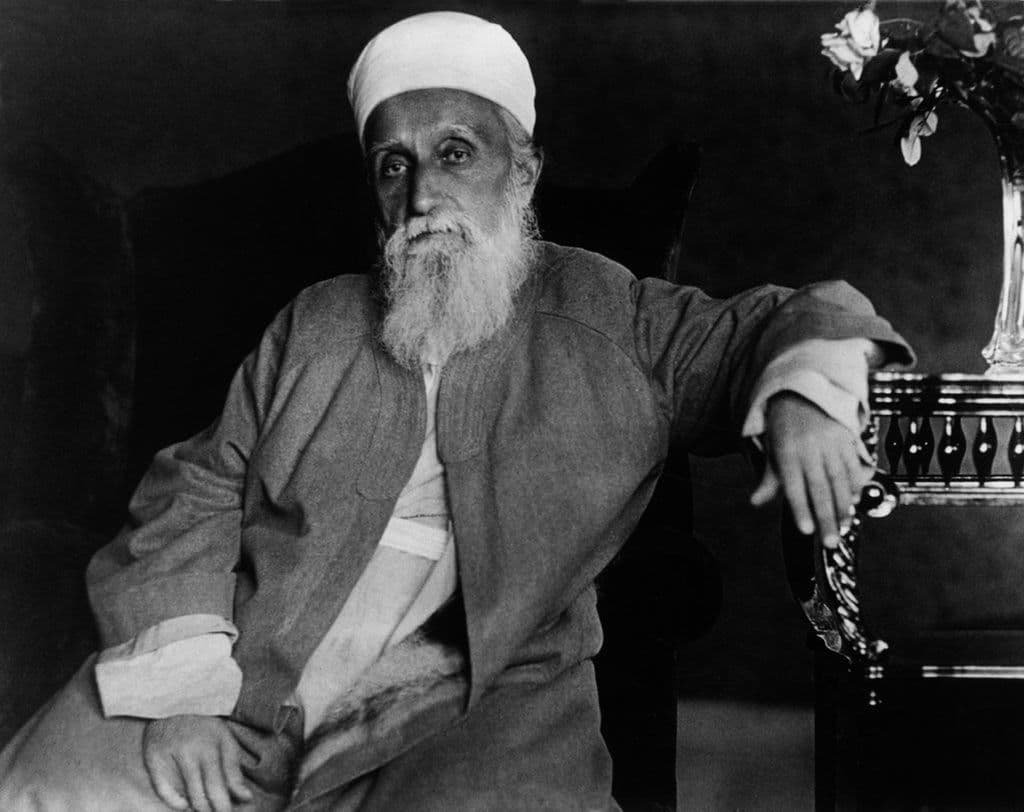
‘Abdu’l-Bahá
The full story
‘Abdu’l-Bahá’s Historic Visit
‘Abdu’l-Bahá undertook a historic visit to America. His impact was significant and noted by leading thinkers throughout the country. He arrived in Philadelphia in early June 1912. The period in which He came, the so-called Third Great Awakening in the United States between the late 1850s and early twentieth century, witnessed the Abolition movement and the Civil War along with a rising tide of anti-Black sentiment in Philadelphia and elsewhere. This prompted two nationally important religious leaders in Philadelphia to invite ‘Abdu’l-Bahá to speak to their congregations.
W.E.B. DuBois had written with great enthusiasm, two months earlier, in The Crisis magazine: “On April 12 ‘Abdu’l-Bahá, the head of the religious movement known as Bahaism [the Bahá’í Faith], arrived in America to visit his rapidly increasing band of followers. His coming is of particular interest to those of us who believe in the brotherhood of man, for that is the doctrine the Bahá’ís emphasize above all other things.”
This was the first of three major articles featuring ‘Abdu’l-Bahá that DuBois published in The Crisis that year. Included in the June issue was the full text of ‘Abdu’l-Bahá’s address to the national convention of the NAACP. DuBois also featured a large photograph of ‘Abdu’l-Bahá the following month in his “Men of the Month” section.
The stage was set in Philadelphia. The city was an active center of opposition to the growing racial antagonism. Pastor Kenneth Evans of Spring Garden Unitarian Church, who was in correspondence with DuBois, welcomed ‘Abdu’l-Bahá to speak at his church. Dr. Evans was noted for his championing of school desegregation in Philadelphia, while ‘Abdu’l-Bahá was known for Bahá’u’lláh’s promotion of the unity of mankind as one of the Bahá’í Faith’s primary teachings. At the same time, Rev. Russell Conwell, founder and first president of Temple University, who had already visited ‘Abdu’l-Bahá in Palestine during His imprisonment, had repeatedly urged Him to come to Philadelphia and address his congregation.
‘Abdu’l-Bahá spoke to large congregations on the subject of tolerance and the unity of mankind at both churches. The audience for His talk at Rev. Conwell’s Baptist Temple exceeded 2,500. In His public and private talks in Philadelphia, ‘Abdu’l-Bahá called for racial equality. This was a major theme of His addresses throughout His nearly nine-month tour of North America at a time when racial segregation was the norm and African Americans in northern and southern states were denied human dignity and the rights of citizens as a matter of course. Among the fruits of ‘Abdu’l-Bahá’s teachings were a widespread series of Race Amity Conferences, including one held in Philadelphia in 1924.
Eyewitness Account
Edna McKinney
Philadelphia · June 10, 1912
“At 9:30 Monday morning, ‘Abdu’l-Bahá went to the home of Mrs. Mary J. Revell, where a meeting had been arranged. There were about 50 people present. ‘Abdu’l-Bahá went into every room of the home and seemed very happy. He sat in a rocker by the front window and spoke these blessed words to all:
‘This is a meeting, the members of which are strung together like pearls and all the pearls are brilliant, for all are Bahá’ís. The brilliancy of these pearls is not known for the present; their brilliancy will be known later on. Thank ye God that He has drawn you together through the Blessed Perfection. He has made you fruitful like unto trees. He has made you like unto a rose garden, the freshness of which will be known in the future.’
All day Monday he gave private interviews. After the meeting in the morning at Mrs. Revell’s home he met the friends who wished a personal word. After having seen most of them he slept for a few moments.”
The people behind the home
The Revell Family
Like most American Bahá’ís in the early twentieth century, the Revell family were Protestant Christians. While a member of Philadelphia’s Fairhill Baptist Church, Mrs. Revell learned of the Bahá’í Faith from her sister, Annie McKinney. Together with her son William and daughters Jessie, Ethel, Mary, and Rebecca, they enrolled in the Bahá’í community and shared their new Faith with their church’s congregation and leadership. Within a few short years, half of the Bahá’í community, about 20 people, were former members of Mrs. Revell’s church.
The Revell family became prominent members of the Philadelphia Bahá’í community. While informational and devotional meetings were hosted by different households, wherever the Revell family lived, their home served as a center of Bahá’í activity. Jessie Revell began to serve as secretary for the Bahá’í community and continued to do so for the next 40 years. With the help of leading Bahá’í travel teacher Isabella Brittingham, they introduced Bahá’í children’s classes and the Nineteen-Day Feast. Mrs. Revell also served as delegate to the national convention of the organization then known as the Bahai Temple Unity, which evolved into the National Spiritual Assembly, the governing body for the Bahá’ís of the United States.
In the early 1900s, the supply of printed Bahá’í literature was limited; the vast majority had to be copied and distributed by hand. Jessie and Ethel Revell, who had business training and strong secretarial skills, were very involved in the duplication and distribution of Bahá’í information. They went on to act for many years as a clearinghouse for communications between the Bahá’í world center in Palestine and the growing American Bahá’í community. As soon as a missive arrived by the latest steamship, the Revells would set to work retyping it on onion skin and sending it out promptly to dozens of communities in the United States and Canada. The home of the Revells constituted not only a local center but also a national communications hub.
The Revell home was also the residence of Elizabeth Stewart, a nurse who participated in an important international project initiated by ‘Abdu’l-Bahá to bring modern education and healthcare to Iranians of all faiths. In 1911, Elizabeth Stewart left the Revell home and traveled to Iran to assist Dr. Susan Moody, a Bahá’í physician from New York who worked with the Bahá’í-sponsored hospital and school in Tehran. Elizabeth Stewart worked with Dr. Moody for nearly 15 years before declining health and political unrest made it necessary for her to return to Philadelphia to live with the Revells until her death in 1926.
During His visit in 1912, ‘Abdu’l-Bahá urged racial unity and predicted that, without it, America would have “streets running with blood.” With the help of the Society of Friends and other race unity-supportive organizations, the Revell family initiated a Congress for Race Amity sponsored by the Philadelphia Bahá’í community. This congress was held at the Witherspoon building in Center City in the fall of 1924, at a time when whippings, lynchings and race riots were being spurred on by racist individuals, local governments and organizations like the Ku Klux Klan. Philadelphia’s race amity congress was part of a multi-city effort to ease America’s racial strife. It was well attended, with 1,000 attendees over two nights, and made possible by the Revell family in collaboration with prominent race unity advocates including Leslie Pinkney Hill, Alain Locke, Louis Gregory, Roy Williams, and many others.
Beginning in 1936, the Revell family joined efforts to take the Bahá’í Faith from Philadelphia out into the suburbs. Teaming up with other Philadelphia Bahá’ís, Mrs. Revell and her daughters Jessie and Ethel would take trolleys and trains to help establish centers of Bahá’í activity in places as far as West Chester, PA and Delaware.
Key Facts
- 1906
- Enrolled in the Faith
- 40yrs
- Jessie Revell as Community Secretary
- 1924
- Race Amity Congress · 1,000 attendees
- 1911–26
- Elizabeth Stewart in Iran
Called to the Holy Land
In 1950, Jessie and Ethel were invited by Shoghi Effendi, ‘Abdu’l-Bahá’s grandson and Guardian of the Bahá’í Faith, to come to the Holy Land and work with him due to their demonstrated capacity and dedication. They served there until their passing and are buried in the Bahá’í Cemetery near the Arc.
Preserving a sacred space
Restoration
The Revell House is a two-story and basement row house on West Mayfield Street in North Philadelphia. The house was built in the early 1880s as part of the North Philadelphia (Workman’s) housing development. It had an entry vestibule, shed kitchen, shallow closets, indoor plumbing, and central heating typical of the period.
2003
The Spiritual Assembly of the Bahá’ís of Philadelphia purchased the house. It was in a condition of disrepair and had been neglected for several decades. A contract was signed with Marvin D. Fackenthall for the initial stages of rescuing this unique property by securing doors, windows, and the roof.
2011
Taheri Architecture was hired to investigate and prepare restoration plans. Fundraising for the work was undertaken by the community. The Spiritual Assembly then set about restoring the property as closely as possible to its original state due to its historic and spiritual significance.
2014
In November, the City of Philadelphia issued the permit for work to begin. The footprint of the house is unchanged for all rooms. The only exception is the second-floor bathroom, where they encroached slightly on an adjacent closet to allow for more space to fit the new lavatory sink without impacting the appearance of the closet. Effort was made to select fixtures to match the period.
2020
The Revell House Dedication was held on Sunday, February 23, 2020.
Visit the Revell House
Walk through the rooms where ‘Abdu’l-Bahá gathered with Philadelphia’s earliest Bahá’ís. Open by appointment.